

Danos por Umidade no Motor do Ventilador: Da Degradação do Isolamento à Falha Total
Sumário
-
Principais conclusões
-
O que acontece com um motor de ventilador danificado pela umidade: processo de falha progressiva
-
Análise em camadas dos componentes internos
-
Absorção de umidade pelo isolamento e perda da rigidez dielétrica
-
Corrosão dos rolamentos e emulsificação do lubrificante
-
Corrosão eletroquímica dos enrolamentos
-
Enferrujamento e travamento de peças metálicas
-
-
Por que os danos causados pela umidade são cumulativos
-
Sinais Observáveis e Indicadores Mensuráveis
-
Estágio Inicial: Queda da Resistência de Isolamento e Aumento da Corrente de Fuga
-
Estágio Intermediário: Flutuação da Corrente e Aquecimento Localizado
-
Estágio Avançado: Funcionamento Intermitente e Falha Total
-
-
design à Prova de Umidade e Critérios de Substituição dos Ventiladores fanacdc
-
Causas e Fatores Contribuintes
-
Ambiente de Alta Umidade e Condensação
-
Grau Insuficiente de Proteção e Envelhecimento das Vedação
-
Inatividade Prolongada e Armazenamento Inadequado
-
-
Consequências da Continuação da Operação
-
Curto-circuitos elétricos e disparo do sistema
-
Riscos à segurança e danos secundários
-
-
Quando a reparação não é uma opção
-
Ações imediatas e prevenção
-
Procedimentos de secagem para motores danificados pela umidade
-
Medidas de prevenção contra umidade e testes regulares
-
-
Confiabilidade de longo prazo com ventiladores à prova de umidade fanacdc
-
Conclusão
-
Perguntas frequentes
Principais conclusões
-
O dano por umidade no motor do ventilador é um processo gradual, que começa com a absorção de umidade pelo isolamento e evolui para falhas elétricas e mecânicas.
-
Os primeiros sinais incluem queda na resistência de isolamento e aumento da corrente de fuga, detectáveis com um megôhmetro.
-
Alta umidade, envelhecimento das vedações e inatividade prolongada são as principais causas do dano por umidade nos motores.
-
Uma vez que a umidade cause curtos-circuitos nas bobinas ou ferrugem severa nos rolamentos, a substituição geralmente é mais econômica do que a reparação.
-
os ventiladores fanacdc possuem designs especializados à prova de umidade e revestimentos protetores para operação confiável em ambientes úmidos.
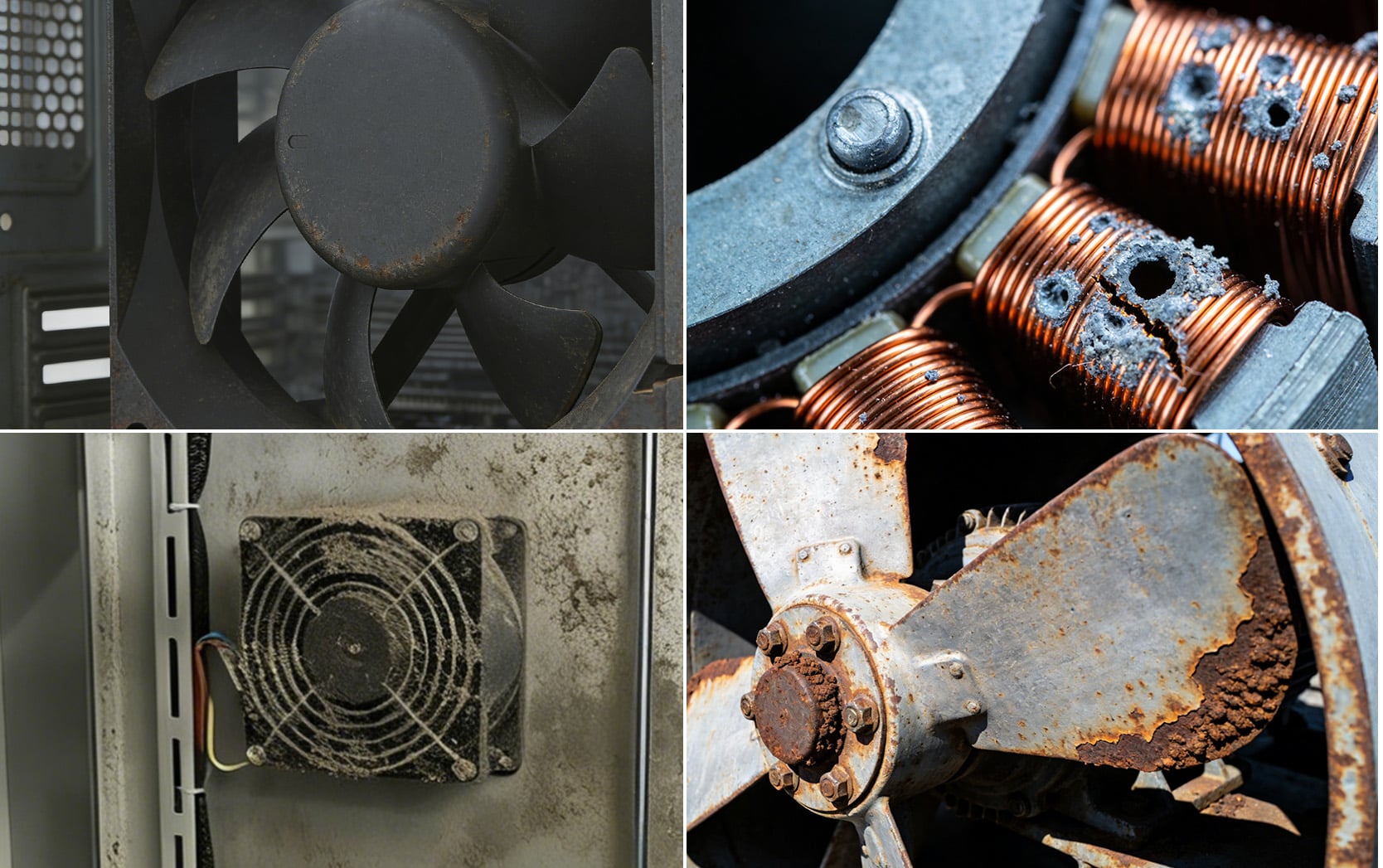
O que acontece com um motor de ventilador danificado pela umidade: processo de falha progressiva
Muitas pessoas presumem que os motores são seguros desde que não estejam submersos em água. A realidade é diferente. A umidade presente no ar representa uma ameaça mais insidiosa. Quando a umidade relativa ultrapassa 80%, os materiais isolantes no interior do motor começam lentamente a absorver umidade. Esse processo é semelhante ao de uma esponja absorvendo água — invisível, mas ocorrendo diariamente.
Os danos causados pela umidade não são eventos súbitos. Trata-se de um processo cumulativo. Inicialmente, a umidade ataca o sistema de isolamento, depois afeta o desempenho elétrico e, por fim, danifica os componentes mecânicos. Compreender essa progressão ajuda você a agir antes que os problemas se tornem irreversíveis.
Análise em camadas dos componentes internos
Absorção de umidade pelo isolamento e perda da rigidez dielétrica
O isolamento do enrolamento do motor é composto por materiais poliméricos com poros microscópicos. Em condições secas, esses materiais suportam milhares de volts. No entanto, quando a umidade invade, a elevada constante dielétrica da água altera a distribuição do campo elétrico, provocando uma queda acentuada na rigidez dielétrica do isolamento.
Dados de pesquisa indicam:
-
Quando a umidade relativa aumenta de 50% para 90%, a resistência superficial do isolamento pode diminuir em até 1000 vezes
-
Para cada ordem de grandeza de redução na resistência de isolamento, a vida útil esperada do motor diminui aproximadamente 40%
-
Quando o teor de umidade no isolamento excede 3%, a perda de rigidez dielétrica pode atingir 50% ou mais
A umidade também acelera a hidrólise do isolamento. Poliéster, poli-imida e materiais semelhantes sofrem ruptura da cadeia molecular em ambientes de alta temperatura e alta umidade, gerando fissuras microscópicas na camada isolante. Essas fissuras criam caminhos para futuras rupturas elétricas.
Corrosão dos rolamentos e emulsificação do lubrificante
Os rolamentos são os componentes mecânicos mais precisos nos motores. Quando a umidade penetra na cavidade do rolamento, entra em contato inicialmente com a graxa. A graxa absorve água e sofre emulsificação, perdendo sua aderência e capacidade lubrificante. A graxa emulsificada apresenta-se esbranquiçada e pastosa, sendo incapaz de formar filmes de óleo eficazes entre os elementos rolantes e as pistas.
Em seguida, a umidade atinge as superfícies metálicas do rolamento. Em condições estáticas, a água em contato com o aço forma manchas de ferrugem em poucas horas. Essas manchas tornam-se pontos de concentração de tensão, acelerando o desgaste por fadiga durante a operação.
A progressão típica da corrosão do rolamento:
-
Estágio inicial: a graxa emulsifica, torna-se esbranquiçada e sua viscosidade diminui
-
Estágio intermediário: aparecem pequenas manchas de ferrugem nos elementos rolantes; o ruído operacional aumenta ligeiramente
-
Estágio avançado: a ferrugem se espalha, a gaiola desgasta-se, a folga radial do rolamento aumenta e as vibrações tornam-se evidentes
-
Estágio final: os rolamentos emperram ou travam, o motor para e queima
Corrosão eletroquímica dos enrolamentos
Este é o modo de falha por umidade mais negligenciado. Quando a umidade penetra nos enrolamentos, especialmente durante períodos prolongados de inatividade ou com o motor desligado, diferentes metais formam efeitos de microbateria. Entre os fios de cobre e o núcleo, ou entre enrolamentos de fases diferentes, ocorre corrosão eletroquímica com a participação da umidade.
Os produtos da corrosão são tipicamente patina verde ou óxidos pretos. Esses apresentam baixa condutividade e aumentam a resistência de contato. Mais grave ainda, a corrosão reduz as seções transversais dos fios, aumentando a densidade de corrente local e gerando pontos quentes. Ao reiniciar o motor, esses pontos quentes podem queimar instantaneamente os fios.
Enferrujamento e travamento de peças metálicas
Carcaças de motores, tampas traseiras (end bells), parafusos de fixação do impulsor do ventilador e outras peças metálicas também enferrujam devido à umidade. A leve oxidação afeta apenas a aparência; a oxidação severa causa:
-
Emperramento das tampas traseiras (end bells) nas carcaças, dificultando a desmontagem
-
Enferrujamento dos parafusos de fixação do impulsor, que se quebram durante a remoção
-
Má ligação à terra da carcaça, aumentando os riscos de segurança
-
Afrouxamento ou queda das massas de equilíbrio, causando vibração
Por que os danos causados pela umidade são cumulativos
Danos por umidade diferem dos danos por superaquecimento de várias maneiras:
-
Alta ocultação : Nos estágios iniciais, quase não há sintomas; a degradação do isolamento ocorre silenciosamente
-
Irreversibilidade : Mesmo após a secagem, o isolamento que absorveu umidade não recupera 100% do desempenho original
-
Autoaceleração : Uma vez que microfissuras aparecem, a penetração da umidade torna-se mais fácil e os danos se aceleram
-
Acoplamento multifatorial : A degradação do desempenho elétrico e os danos mecânicos reforçam-se mutuamente, criando um ciclo vicioso
Dados indicam que motores operando por longo prazo em ambientes com umidade relativa acima de 85% apresentam uma redução média de vida útil superior a 60% em comparação com ambientes secos. Essa redução de vida útil é irreversível — mesmo que as condições ambientais melhorem posteriormente, o envelhecimento do material já ocorreu e não pode ser reparado.
Sinais Observáveis e Indicadores Mensuráveis
Estágio Inicial: Queda da Resistência de Isolamento e Aumento da Corrente de Fuga
A resistência de isolamento é o indicador mais direto do grau de umidade. Utilizando um megôhmetro para medir a resistência de isolamento entre o enrolamento e a terra, os valores normais devem superar 100 megôhms. Quando a resistência de isolamento cair abaixo de 10 megôhms, há uma umidade significativa presente. Abaixo de 1 megôhm, o motor corre risco de ruptura a qualquer momento.
A medição da corrente de fuga é ainda mais sensível. Aplique a tensão de operação e meça a corrente de fuga para a terra com um amperímetro de alta precisão. Motores normais apresentam correntes de fuga abaixo do nível de miliampère. Quando a corrente de fuga exceder 5 miliampères, o isolamento estará severamente comprometido.
Frequência recomendada de ensaios :
-
Ambientes normais: medir a resistência de isolamento trimestralmente
-
Ambientes de alta umidade: medir mensalmente
-
Motores inativos por longo período: devem ser testados antes da reinicialização
Estágio Intermediário: Flutuação da Corrente e Aquecimento Localizado
Quando os danos causados pela umidade atingirem o estágio intermediário, a degradação do isolamento começa a afetar o desempenho em operação. Você pode observar:
-
Corrente em vazio claramente superior ao valor nominal (acima de 10%)
-
Desequilíbrio de corrente trifásica superior a 5%
-
Aquecimento anormal localizado no corpo do motor (detectável com imagem térmica)
-
Desarmamento ocasional do DR durante a partida
Esses fenômenos ocorrem porque a umidade cria pontos locais de isolamento defeituoso, formando caminhos microscópicos de fuga. Esses caminhos aquecem sob tensão, danificando ainda mais o isolamento circundante e criando uma retroalimentação positiva.
Estágio Avançado: Funcionamento Intermitente e Falha Total
Na fase avançada, os motores apresentam:
-
Funcionamento intermitente, especialmente em condições de alta umidade ou nas manhãs
-
Estalos ou zumbidos (descarga parcial)
-
Fumaça ou cheiro de queimado
-
Falha total na partida ou partida seguida de desarme rápido
A abertura do motor nesta fase revela, tipicamente, produtos de corrosão brancos ou verdes nas extremidades dos enrolamentos, papel isolante enegrecido e frágil, bem como marcas de descarga nas aberturas das ranhuras.
design à Prova de Umidade e Critérios de Substituição dos Ventiladores fanacdc
a fanacdc desenvolveu uma série especializada de ventiladores à prova de umidade para ambientes úmidos, com as seguintes características:
-
Tratamento aprimorado de isolamento : Processo de impregnação a vácuo que preenche totalmente os espaços entre as espiras com verniz isolante, reduzindo a absorção de água em 70%
-
Revestimento antirruído : Todas as peças metálicas zincadas ou revestidas por pulverização; teste de névoa salina superior a 200 horas
-
Rolamentos selados : Rolamentos com dupla vedação e vida útil prolongada da graxa, com classificação de proteção contra água e poeira atingindo IP55+
-
Estrutura de drenagem : Orifícios de drenagem na base do corpo para evitar o acúmulo de condensado
-
Materiais resistentes ao mofo : Peças plásticas com aditivos antifúngicos, adequadas para ambientes úmidos e quentes
critérios recomendados de substituição da fanacdc :
-
Resistência de isolamento abaixo de 5 megohms e não recuperável após secagem
-
Corrente de operação excedendo o valor nominal em 15%, sem outros métodos de melhoria
-
Rolamentos apresentando ruído evidente de ferrugem
-
Motor já sofreu falha à terra ou curto-circuito entre fases
-
Motores de equipamentos críticos operando além da vida útil projetada (mesmo que não tenham falhado completamente)
Causas e Fatores Contribuintes
Ambiente de Alta Umidade e Condensação
A causa mais comum de danos por umidade é a alta umidade ambiental. As situações de maior risco incluem:
-
Porões, túneis, poços e locais úmidos semelhantes
-
Áreas costeiras, exposição ao ar livre durante as estações chuvosas
-
Ambientes com grandes variações de temperatura entre dia e noite (propensos à condensação)
-
Próximo a equipamentos de limpeza (lavagem sob alta pressão, esterilização a vapor)
A condensação é particularmente perigosa. Quando a temperatura da superfície do motor cai abaixo do ponto de orvalho do ar, o vapor d'água presente no ar condensa-se em gotículas sobre a superfície do motor. Essas gotículas podem infiltrar-se para o interior através de folgas.
Grau Insuficiente de Proteção e Envelhecimento das Vedação
Muitas falhas em motores ocorrem porque as classificações de proteção eram inadequadas para a aplicação:
-
Motores com grau de proteção IP54 ou inferior não são adequados para ambientes externos úmidos
-
Envelhecimento e endurecimento das vedações, resultando na perda de eficácia
-
Vedação deficiente da caixa de terminais, permitindo a entrada de umidade pelos terminais
-
Vedações do eixo desgastadas, permitindo a entrada de umidade na cavidade dos rolamentos ao longo do eixo
As vedações também possuem uma vida útil limitada. As vedações de borracha racham e envelhecem devido à exposição ao ozônio e à radiação UV; recomenda-se inspeção e substituição a cada 3 a 5 anos.
Inatividade Prolongada e Armazenamento Inadequado
Esta é a causa mais facilmente negligenciada. Os motores em operação geram calor, o que ajuda a eliminar a umidade. Motores inativos por longos períodos apresentam temperaturas internas iguais às do ambiente, tornando-os mais suscetíveis à absorção de umidade. Dados indicam:
-
Motores inativos por mais de 3 meses apresentam, em média, queda de 40% na resistência de isolamento
-
Motores inativos por mais de 6 meses apresentam taxas de falha na inicialização de 30%
-
Motores armazenados sem embalagem têm probabilidade cinco vezes maior de danos causados pela umidade
Recomendações de Armazenamento armazenar motores inativos a longo prazo em áreas secas e bem ventiladas. Operar em vazio por 30 minutos mensalmente para remover a umidade. Sempre que possível, embalar em sacos à prova de umidade com agente dessecante.
Consequências da Continuação da Operação
Curto-circuitos elétricos e disparo do sistema
Quando a isolação falha completamente, ocorrem curtos-circuitos entre fase e terra ou entre fases. As correntes de curto-circuito podem exceder a corrente nominal de operação em até 10 vezes, causando:
-
Desarme do disjuntor de distribuição, afetando outros equipamentos na mesma linha
-
Queima instantânea das bobinas, gerando fumaça significativa
-
Danos ao inversor de frequência (VFD) ou ao controlador (em sistemas de velocidade variável)
-
Quedas de tensão na rede elétrica, afetando outros equipamentos sensíveis
Riscos à segurança e danos secundários
Operar motores danificados pela umidade cria sérios riscos à segurança:
-
Energização da carcaça, risco de choque elétrico
-
Descarga parcial que pode inflamar materiais combustíveis ao redor
-
Arco elétrico durante curtos-circuitos, danificando componentes próximos
-
Travamento dos rolamentos causando parada do motor e elevação rápida da temperatura
Danos secundários são frequentemente mais caros. Exemplos: curtos-circuitos no motor danificando inversores de frequência (VFDs), travamento dos rolamentos danificando acoplamentos e equipamentos acionados. Essas perdas indiretas podem multiplicar o valor do motor várias vezes.
Quando a reparação não é uma opção
Reparar motores danificados pela umidade frequentemente representa um dilema: investir mão de obra significativa com resultados insatisfatórios.
A reparação não é recomendada quando :
-
Enrolamentos já em curto-circuito : Mesmo após o reenrolamento, o núcleo pode ter sofrido recozimento devido ao calor, reduzindo o desempenho magnético
-
Carcaça dos rolamentos desgastada : Assento do rolamento na tampa traseira desgastado; novos rolamentos não conseguem garantir concentricidade
-
Ferrugem severa : Estruturas internas severamente enferrujadas, possivelmente danificadas durante a desmontagem
-
Isolamento envelhecido : Mesmo após secagem, o material isolante já sofreu hidrólise e tornou-se frágil, podendo falhar novamente a qualquer momento
-
Motores pequenos : Os custos de reparação frequentemente ultrapassam metade do preço de um motor novo, tornando-o economicamente injustificável
: A reparação de motores exige equipamentos e técnicas especializados: fornos de secagem a vácuo, sistemas de impregnação e equilibradores dinâmicos. Oficinas de reparação comuns não dispõem dessas condições, não sendo possível garantir a qualidade da reparação.
Ações imediatas e prevenção
Procedimentos de secagem para motores danificados pela umidade
Se for detectado dano por umidade, mas o motor ainda não tiver falhado, siga estes passos:
-
Limpeza de Superfície : Remova poeira e óleo do corpo do motor e assegure uma boa ventilação
-
Secagem externa : Utilize pistolas térmicas ou lâmpadas de infravermelho no corpo do motor, mantendo a temperatura abaixo de 80 °C
-
Remoção de umidade interna : Remover as tampas finais, se possível, e usar ar quente para secar o interior
-
Método atual de secagem : Imobilizar o rotor (de forma segura), aplicar alta corrente em baixa tensão e utilizar o aquecimento próprio do enrolamento para eliminar a umidade, mantendo a temperatura entre 70–80 °C
-
Medição da isolação : Verificar a resistência de isolamento a cada 2 horas até que se estabilize acima de 10 megohms
Nota : A secagem não pode ser apressada. Um aumento rápido de temperatura pode provocar fissuras na isolação. Temperaturas excessivas podem danificar componentes plásticos.
Medidas de prevenção contra umidade e testes regulares
A prevenção é melhor que a correção:
-
Especificar com margem de segurança ao selecionar : Escolher um grau de proteção mais elevado para ambientes úmidos (IP55+)
-
Instalar protetores contra gotejamento : Adicionar coberturas contra chuva para motores externos
-
Manter a alimentação elétrica : Operar em vazio regularmente durante longos períodos de inatividade
-
Adicionar agente dessecante : Colocar saquinhos de agente dessecante nas caixas de derivação
-
Tratamento de vedação : Vedação das entradas dos cabos com selante
-
Testes regulares : Manter registros de resistência de isolamento e acompanhar tendências
-
Fitas aquecedoras adicionar faixas de aquecimento anti-condensação para equipamentos críticos, aquecimento automático durante paradas
Confiabilidade de longo prazo com ventiladores à prova de umidade fanacdc
a fanacdc compreende profundamente os desafios que o ambiente úmido representa para motores de ventiladores. Nossa série à prova de umidade passa por testes rigorosos:
-
Teste de umidade : 1.000 horas de operação contínua a 40 °C e 93% de umidade relativa
-
Teste de spray de sal : 48 horas em névoa salina a 5%, sem formação de ferrugem vermelha
-
Teste de isolamento : Testado imediatamente após imersão em água, com resistência de isolamento ainda > 50 megohms
-
Choque térmico : Ciclos de -20 °C a 70 °C, sem alteração no desempenho da vedação
Caso prático do mundo real: Uma fábrica química costeira que utilizava ventiladores convencionais apresentava vida útil média de 6 meses. Após a substituição pela série à prova de umidade fanacdc, a operação contínua ultrapassou 3 anos sem falhas, gerando economia anual em manutenção superior a 50.000 RMB.
Escolher a fanacdc oferece-lhe mais do que ventiladores — você obtém soluções abrangentes para ambientes úmidos. Nossa equipe de suporte técnico pode auxiliar em avaliações in loco para fornecer as soluções mais adequadas contra umidade.
Conclusão
Danos por umidade no motor do ventilador são um processo oculto, mas perigoso. Desde a absorção gradual de umidade pelo isolamento até a degradação do desempenho elétrico e, por fim, aos danos nos componentes mecânicos, cada etapa prepara o terreno para uma falha total definitiva. Ao identificar sinais precoces e adotar medidas oportunas de secagem e proteção, é possível prevenir a maioria das falhas.
A chave está em:
-
Medir regularmente a resistência de isolamento e estabelecer dados de referência
-
Monitorar alterações anormais na corrente e no ruído
-
Proteger motores inativos por longos períodos contra a umidade
-
Escolher graus adequados de proteção para ambientes úmidos
os ventiladores à prova de umidade da fanacdc foram projetados especificamente para oferecer proteção confiável em ambientes úmidos adversos. Combinados com uso e manutenção adequados, seus equipamentos alcançarão maior vida útil e maior confiabilidade operacional.
Não espere até que os motores comecem a fumegar para pensar na proteção contra umidade. Comece a observar hoje mesmo o ambiente operacional de seus ventiladores. Proteja seus equipamentos com métodos científicos.
Perguntas frequentes
Posso utilizar um motor danificado pela umidade após secagem ao ar por alguns dias?
Não necessariamente. A secagem natural ao ar remove apenas a umidade superficial. A umidade interna do isolamento exige calor para ser eliminada. Utilize métodos de secagem com ar quente ou com corrente elétrica e verifique se a resistência de isolamento atinge o valor exigido antes de colocar o motor em operação.
Por que motores novos armazenados por um ano frequentemente apresentam falhas?
Durante o armazenamento prolongado sem proteção contra umidade, os motores absorvem lentamente umidade internamente. O desempenho do isolamento degrada-se e pode ocorrer ruptura quando o motor for religado à rede. Motores novos também exigem proteção contra umidade durante o armazenamento.
Qual é o valor seguro de resistência de isolamento?
Para motores típicos de 380 V, a resistência de isolamento deve superar 1 megohm por kV, ou seja, acima de 0,38 megohm. Contudo, recomenda-se manter uma margem de segurança. Motores secos normalmente apresentam valores superiores a 10 megohms. Abaixo de 1 megohm, é necessário proceder à secagem; abaixo de 0,5 megohm, é estritamente proibido energizar o motor.
Posso secar o interior de um motor com um secador de cabelo?
Sim, mas com precauções: temperatura abaixo de 80 °C, distância superior a 15 cm e evitar o superaquecimento local. Componentes plásticos, como rodas de turbocompressores e placas terminais, devem evitar o fluxo de ar quente direto. O ideal é remover as tampas laterais para melhorar a circulação do ar.
O que devo fazer se um motor ficar exposto à água?
Desligue imediatamente a alimentação elétrica, desmonte o motor, limpe os enrolamentos e os componentes internos com álcool anidro e, em seguida, seque a 80 °C por mais de 24 horas. Meça a resistência de isolamento para verificar se está dentro dos valores aceitáveis antes da remontagem. Verifique os rolamentos quanto à presença de ferrugem e substitua-os, se necessário.